
Playground safety checklist
Walk your playground with this list before children use it. Every item comes from the CPSC Public Playground Safety Handbook, the guide U.S. inspectors and insurers work from.
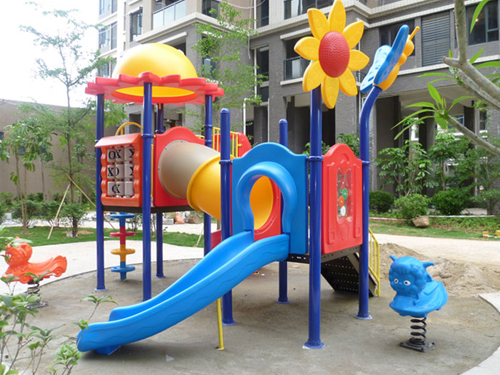
Check your playground
Tick items as you go; your progress is saved in this browser. Print it to take outside.
Surfacing under and around the equipment
- Protective surfacing covers the ground under and around all equipment.No grass, dirt, concrete or asphalt in a use zone.
- Loose fill is at least 9 inches deep everywhere.Install 12 inches; it settles to about 9. Shredded rubber: 6 inches.
- Surfacing extends at least 6 feet in all directions from the equipment.
- In front of and behind swings, surfacing extends twice the height of the swing’s pivot.That zone must not overlap any other use zone.
Layout
- Equipment over 30 inches high is at least 9 feet from neighboring equipment.6 feet is enough when both are 30 inches high or less.
- Toddlers, preschoolers and school-age children have separate areas.A bench row or plantings can mark the separation.
- Adults can see every part of the play area.
- No trip hazards in the use zones: exposed footings, rocks, roots.
Equipment
- No openings between 3.5 and 9 inches that could trap a child’s head.Check guardrails, ladder rungs and gaps between parts.
- No open S-hooks or protruding bolt ends.These catch clothing.
- No sharp points, corners or edges, and no missing caps or plugs.
- Elevated platforms have guardrails or protective barriers.For preschoolers: guardrails above 20 inches, barriers above 30 inches.
- No crush or shearing points on moving parts.
- No rust, rot, cracks or splinters, and everything is firmly anchored.
Before play
- Children’s hood and neck drawstrings, and scarves, are removed.They can catch on equipment.
- No ropes, strings or swings looped over rails (user modifications).
- An adult is actively supervising.
All items from the CPSC Public Playground Safety Handbook.
Using this checklist
This is a quick walk-through, not a certified inspection. Use it before opening each day or after storms, and fix or fence off anything that fails.
For a detailed, recorded inspection, use our inspection and maintenance checklist. Schools, daycares and parks often also book a yearly inspection by a Certified Playground Safety Inspector (CPSI).
Questions about playground safety
What is the most important safety item?
Surfacing. The CPSC handbook says falls from playground equipment have remained the largest single hazard pattern, which is why protective surfacing and its depth come first.
How deep should mulch or wood chips be?
Keep at least 9 inches. The CPSC handbook recommends installing 12 inches, because loose fill compresses and gets kicked away under swings and slides.
Is this checklist enough for a school or daycare?
It covers the CPSC basics. Licensed daycares and public schools also have state rules and inspections, and many insurers ask for a yearly certified inspection.
Can Bluejayset fix what we find?
Yes. Send photos of anything that fails, and we can quote replacement parts, surfacing or new equipment.
Found problems?
Send photos and a list of what failed. We reply with parts, surfacing or replacement options.